When people hear the words “modular home,” they often assume the home should be inexpensive.
Modular construction can offer important efficiencies, but modular does not automatically mean cheap. It describes how and where the home is built, not the quality of the materials, the level of customization or the amount of skilled work involved.
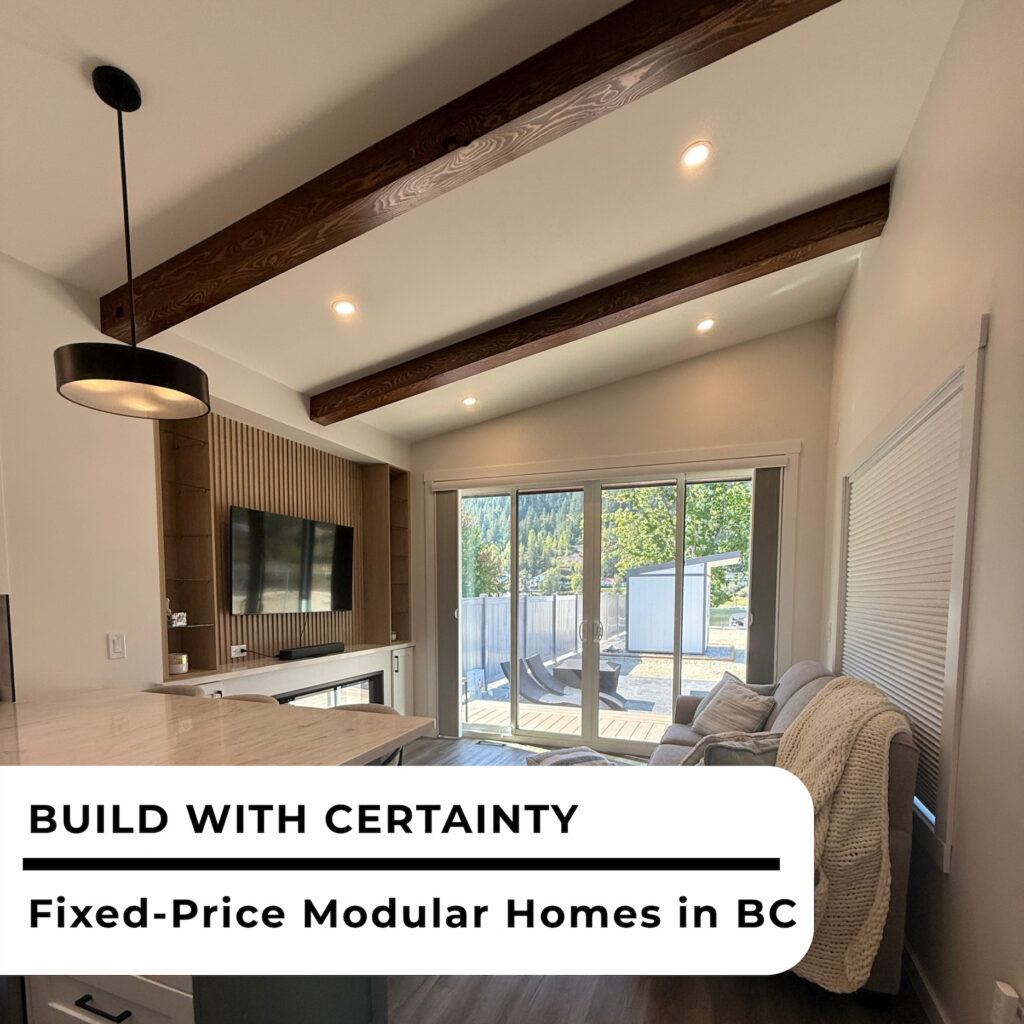
A basic home built from a standard plan is very different from a custom modular home with personalized layouts, custom millwork, upgraded finishes and carefully selected exterior materials.
For homeowners comparing modular home prices in BC, the starting price is only part of the conversation. The certainty of that price can be just as important.
A fixed-price contract for a clearly defined modular home can provide valuable budget confidence, especially when construction costs, material prices and labour rates continue to change.
The Lowest Initial Price May Not Be the Final Price
When comparing home-building quotes, it is tempting to choose the lowest number.
The challenge is that not every quote represents the same thing.
One price may be a preliminary estimate based on allowances and standard finishes. Another may be based on finalized plans, confirmed materials, selected finishes and a detailed scope of work.
The second number may appear higher, but it may also provide a much clearer picture of what the homeowner will actually pay.
Before comparing modular and stick-built home costs, homeowners should ask:
-
Is this an estimate or a fixed contract price?
-
Which materials and finishes are included?
-
Are cabinetry and millwork standard or custom?
-
Are appliances, plumbing fixtures and lighting included?
-
Does the price include delivery, craning and installation?
-
Which site costs are excluded?
-
Are there allowances that could change later?
-
How are owner-requested changes handled?
-
Does the contract include a price-escalation clause?
A low estimate can be appealing, but it offers limited value if the price continues to change as the project progresses.
What Is a Fixed-Price Construction Contract?
A fixed-price contract establishes an agreed price for a defined scope of work.
For a custom modular home, that scope may include the approved floor plan, construction specifications, selected finishes, cabinetry, windows, doors, fixtures and other agreed features.
Once the plans, selections and contract are finalized, the homeowner has a clearer understanding of the cost of the home described in that agreement.
This does not mean that every possible project expense is automatically covered.
Owner-requested changes, unexpected site conditions, permit requirements, utility connections, foundations, transportation challenges and work completed by outside contractors may fall outside the original contract. The inclusions and exclusions should always be clearly documented.
The value of fixed pricing is not that nothing can ever change. Its value is that the price of the agreed scope is established before construction begins.
Why Modular Construction Supports Greater Cost Certainty
Both modular and site-built homes can be offered under fixed-price contracts. The contract terms matter more than the construction method alone.
However, the modular building process can make it easier to define more of the home before production begins.
Before a Kyllo Home enters production, clients work through important decisions involving:
-
Floor-plan modifications
-
Exterior materials and colours
-
Windows and exterior doors
-
Cabinetry and custom millwork
-
Countertops
-
Flooring
-
Plumbing fixtures
-
Lighting
-
Interior finishes
-
Appliances and other selected features
Making these decisions earlier allows the builder to prepare a more complete scope, coordinate purchasing and establish the production requirements before the home moves through the factory.
This front-loaded planning can reduce the number of unresolved allowances and last-minute decisions that create uncertainty during construction.
Modular Versus Stick-Built Construction Costs
A site-built home is constructed primarily on the homeowner’s property. Depending on the contract and builder, portions of the project may be priced using estimates, allowances or cost-plus arrangements.
Construction may also extend over a longer period, leaving the project exposed to changes in labour rates, subcontractor availability, fuel costs and material pricing.
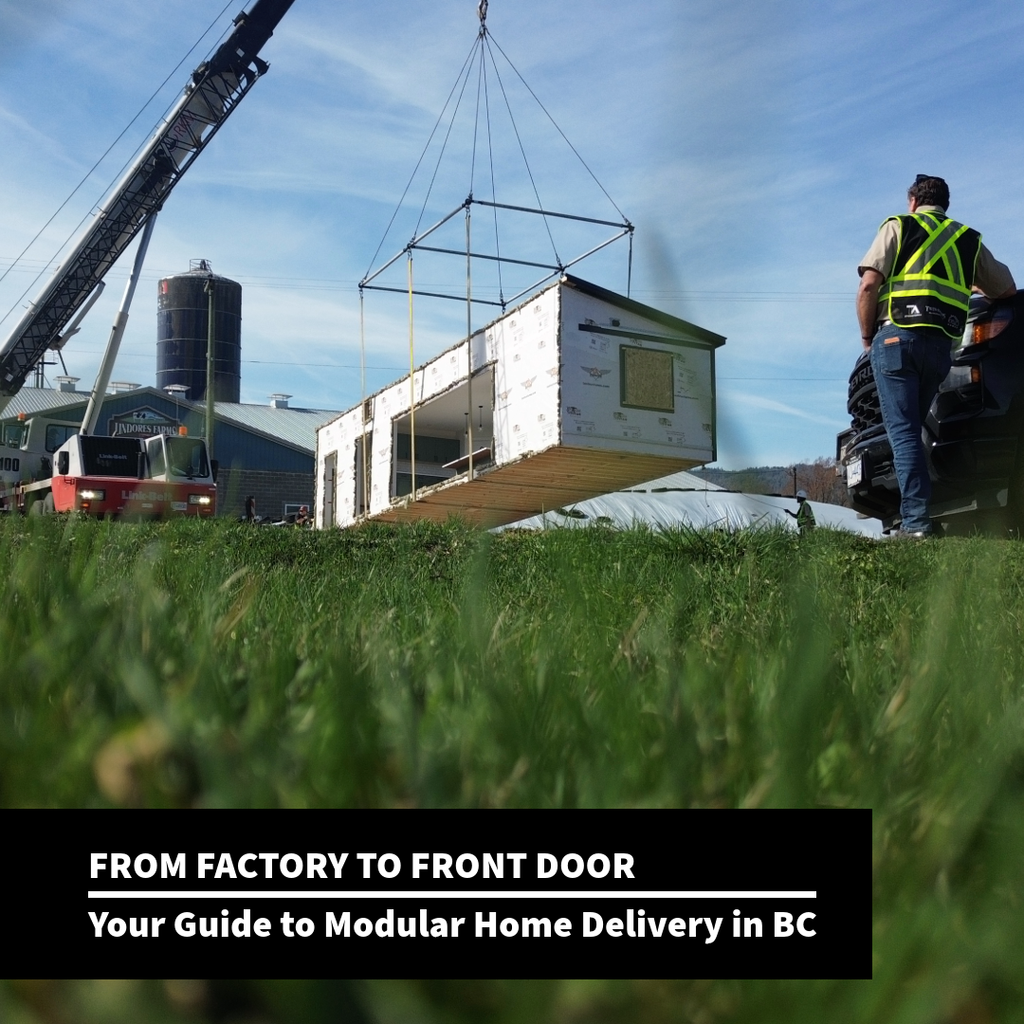
Modular homes are constructed indoors in a controlled manufacturing environment. Materials, trades and production stages can be coordinated in one location, and much of the home is completed before it reaches the property.
This does not make modular construction immune to increasing costs. It can, however, reduce the time between material purchasing and factory completion while allowing more of the home’s specifications to be confirmed in advance.
Statistics Canada reported that residential building construction costs across its 15-city composite were 2.3% higher year over year in the second quarter of 2026. Fuel prices, supply-chain disruptions and pressure on skilled trades continued to affect the construction industry.
When costs remain unpredictable, knowing the price of an agreed construction scope can carry real value.
What Do Modular Homes Cost Per Square Foot in BC?
As a general planning range, modular homes in British Columbia currently cost approximately $250 to $350 per square foot.
This range is not a guaranteed quote. The final cost depends on the home’s size, layout, specifications, finishes and level of customization.
A simple modular home based closely on an existing plan will generally fall into a different price category than a highly personalized home with structural changes, extensive custom millwork and premium finishes.
Price per square foot can be useful during early planning, but it should never be considered without examining what the price includes.
A quote for the home itself may not include:
-
Land
-
Surveying
-
Geotechnical work
-
Site clearing and excavation
-
Foundation construction
-
Utility connections
-
Municipal permits and development fees
-
Transportation and craning
-
Decks, stairs and railings
-
Landscaping
-
Applicable taxes
-
Work completed by third-party site contractors
Two builders may advertise similar prices per square foot while providing significantly different scopes of work.
Why Customization Increases Modular Home Pricing
At Kyllo Homes, modular does not mean selecting a mass-produced home from a catalogue and accepting it exactly as shown.
Clients can begin with an existing floor plan and personalize it around their property, priorities and lifestyle. Some changes are primarily aesthetic, while others affect design, engineering, materials and production labour.
Moving walls, changing window sizes, adding a bump-out or modifying a roofline can affect several parts of the build. The change may require revised drawings, engineering review, different material quantities and additional production time.
Customization increases cost because it adds real work and real value to the home.
The goal is not to make every project as expensive as possible. It is to help each homeowner invest in the features that matter most to them.
Why Custom Millwork Costs More
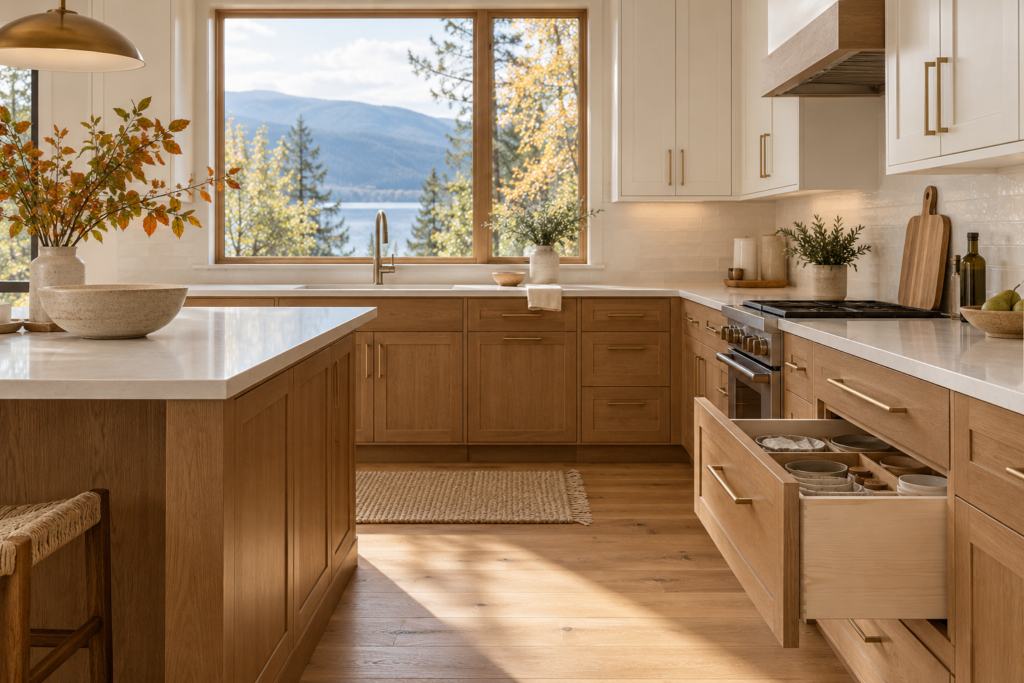
Custom cabinetry and millwork are among the features that most clearly separate a personalized home from a basic modular product.
Stock cabinetry is manufactured in standard sizes and configurations. Custom millwork is designed and built for a specific room, wall or homeowner.
That process may involve:
-
Measuring and designing for the available space
-
Creating specialized cabinet configurations
-
Selecting materials, finishes and hardware
-
Building non-standard cabinet sizes
-
Incorporating storage around appliances and fixtures
-
Adding pantries, wardrobes or entertainment centres
-
Finishing and installing each component
Custom millwork requires design time, skilled labour, materials and careful coordination. It will naturally cost more than a basic stock cabinet package.
It can also make a smaller home significantly more functional. Well-designed cabinetry uses space efficiently, reduces clutter and creates storage that supports how the homeowner actually lives.
The value is not simply in having more cabinets. It is in having cabinetry made for the home and the people living in it.
Why a Higher Fixed Price Can Represent Better Value
A detailed fixed-price proposal may initially appear more expensive than a preliminary estimate.
The difference may be that the fixed price already reflects the real selections, materials and labour required to build the home the client has requested.
A lower estimate may still rely on:
-
Unconfirmed material pricing
-
Basic finish allowances
-
Incomplete drawings
-
Unselected fixtures
-
Provisional site costs
-
Future subcontractor pricing
-
Items that have not yet been included
As those decisions are finalized, the original estimate can increase.
This is why homeowners should compare the expected final scope rather than simply comparing the first number presented by each builder.
A realistic price established early can make financing, cash-flow planning and overall project budgeting easier. It can also reduce the stress of discovering that important features were never included in the original estimate.
Fixed Price Does Not Mean Unlimited Changes
A fixed-price contract applies to the plans, selections and scope described in the agreement.
If a homeowner changes the floor plan, materials, cabinetry or fixtures after the contract has been finalized, the change may affect both the price and construction schedule.
This is why the design and selection process is so important.
Taking time to confirm decisions before production begins protects the homeowner and the builder. Everyone understands what is being built, which products have been selected and what is included in the agreed price.
Any requested changes should be documented and approved through a written change order before the additional work proceeds.
How to Compare Modular and Site-Built Home Quotes Fairly
When comparing a custom modular home with a stick-built home in BC, ask each builder to provide a clear written scope.
Review:
-
The contract type
-
The validity period of the quoted price
-
Any escalation clauses
-
The construction specifications
-
Finish allowances
-
Cabinetry and millwork details
-
Delivery and installation costs
-
Site-work responsibilities
-
Permit and engineering costs
-
Change-order procedures
-
Payment schedules
-
Warranty coverage
-
The items specifically excluded from the price
A price without a detailed scope is difficult to evaluate.
The best comparison is not modular versus stick built or one price per square foot versus another. It is the complete expected cost of achieving a comparable home.
Building a Custom Modular Home With Confidence
Modular construction is sometimes marketed as the cheapest way to build. That description does not accurately reflect every modular home or every modular builder.
A custom Kyllo Home is built around the homeowner’s selected plan, finishes and priorities. Customization and millwork influence the investment because they require additional design, materials, craftsmanship and production time.
The value of the modular process is not limited to finding the lowest possible price.
It can also provide:
-
A clearly defined scope
-
Earlier design decisions
-
Greater production control
-
Protection from weather-related construction delays
-
A coordinated factory schedule
-
More predictable pricing for the contracted work
-
A smoother path from design to completion
For many BC homeowners, that cost certainty is worth considering alongside the initial price.
Kyllo Homes designs and builds custom modular homes in Sicamous, British Columbia, for delivery across BC and Western Canada. Contact our team to discuss your property, priorities and budget, and learn what should be included in a realistic quote for your home.
Important pricing disclaimer: The pricing information in this article is provided as a general planning guide as of October 2026 and is not a quote, offer or guarantee. Prices vary according to home size, design, specifications, material availability, site conditions, delivery location, installation requirements, permits, taxes and other project-specific factors. Fixed-price protection applies only to the scope, specifications, terms and exclusions stated in the signed contract. Owner-requested changes, unforeseen conditions and work outside the contracted scope may result in additional costs. Homeowners should carefully review their construction agreement and obtain independent legal, financial and site-specific advice when appropriate.